Principal Residence Exemption

What is a Principal Residence?

A Principal Residence: A housing unit that you own, individually or jointly, that you, your partner or your child ordinarily inhabited at some point during the year.

Ordinarily inhabited does not require you to reside in the home for the majority of the year. Even a vacation home or cottage can qualify, if you don’t own it primarily to earn rental income and you do actually use it occasionally. For any given year, only one property may be designated as a principal residence per family unit (you, your spouse, your unmarried children under the age of 18). 

What is the Principal Residence Exemption (“PRE”)?

 Principal Residence Exemption (PRE): The tax benefit from naming an eligible property as your principal residence. 

It allows you to shelter some or all the capital gains generated upon the sale or disposition of a principal residence. Which gains are sheltered depend on how many years you designate the property as your principal residence, relative to how long you owned it.

Tax – Free Portion of Gain = A x (B ÷ C)

A = Total capital gain (before PRE)

B =  Number of years designated as your principal residence plus one year

C = Number of years you owned the property


Example: Taxpayer purchased a property in 2010 and sold it in 2024.
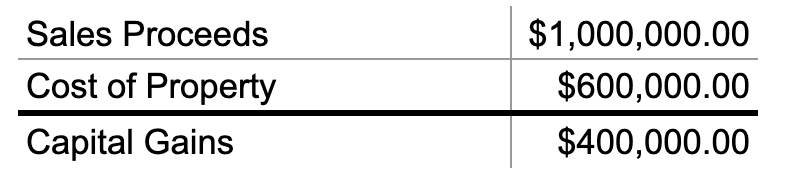
If the property is designated as Principal Residence for all years of ownership:

$400,000 x (14 ÷14) = $400,000

Using the above formula, all capital gains are sheltered and the sale of the property results in no income tax owing.

If the property is designated as Principal Residence for only 10 years of ownership:

$400,000 x (11 ÷14) = $314,286

Using the above formula, about 314k of capital gains are sheltered. The remainder ($85,714) of capital gains is subject to taxation.

If you own more than one eligible property, the optimal allocation of principal residences should be determined to shelter the maximum amount of capital gains.

Taxpayers must file a form as a part of their income tax return in the year of sale/disposition of the property even if the entire capital gain is sheltered. Failure to file this form on time can result in substantial late-filing penalties.

Change in Use of Property

1. Change from principal residence to income producing

When you convert your home to an income producing property (rental property), there is a deemed disposition for tax purposes. It’s treated as if you “sold” it at its current market value and immediately “re-bought” it. Any gain resulting from the deemed disposition can be sheltered using the principal residence exemption.

A special election exists that allows you to treat the property as your principal residence for up to 4 more years after the conversion, even though you no longer live there. This can result in significant tax savings when you eventually sell the property. Contact us for more information and for help in filing this election.

2. Change from income producing to principal residence

When you convert a rental property (or other income property) into your principal residence (i.e., you move in), there is also a deemed disposition and re-acquisition for tax purposes.

A similar election can be filed so that the property can be designated as your principal residence for up to 4 years before you actually moved in. Again, this can result in significant tax savings when you eventually sell the property. Contact us for more information and for help in filing this election.

Important Disclaimer

This is a general overview intended for information only. Your eligibility for PRE and whether a property qualifies as a “principal residence” depends on your individual facts and circumstances. Tax laws and CRA’s interpretation can change. Contact us for more information.